Edo era
Pale Blue & Vermillion— 浅葱と朱
The faded blue of Shinsengumi jackets against shrine-gate vermillion — restrained power.
red · 3 palettes
朱
Shrine vermillion
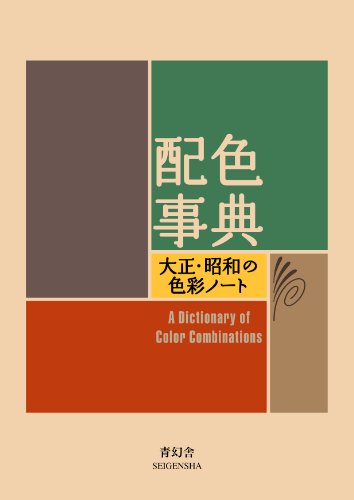 Most colors in this archive come from one 1933 book. Get Sanzo Wada's 1933 Dictionary on Amazon → Affiliate link; your price is unchanged. As an Amazon Associate we earn from qualifying purchases.
Shu (朱) is a mid-tone, vivid red tone. Its hex value is #D8453A — that is
RGB 216, 69, 58, or HSL 4°, 67%, 54%.
Shrine vermillion.
It holds 4.8:1 contrast against dark, so Shu works best for body text, headings, and UI labels. (On white it scores 4.3:1; on black 4.8:1.)
Across Sanzo Wada's 1933 Dictionary of Color Combinations, Shu appears in 3 combinations — most often paired with Gofun, Asagi and Sumi.
Shu (朱) is the bright orange-red of cinnabar pigment — mercury sulfide ground to powder and bound in lacquer. It's a mineral, not a dye, which gives it a luminous, almost glowing quality that no purely-red pigment can match. Shu is the colour of Shinto torii gates, temple pillars, ceremonial bowls, and the lacquerware traditions of Wajima and Kyoto.
Culturally it carries a completely different register from the textile reds: shu signals the sacred, the threshold, and the protective. The red lacquer on a temple gate is not decoration — it is a colour with apotropaic function. In contemporary design it works for hospitality, religious or wellness brands, and any project that needs to feel 'doorway' or 'entrance.'
Working note: Three-colour palette: shu, ink-black (sumi), and gold leaf — the temple-architecture combination. Reads as ceremonial without reading as tourist.
See Shu in the Japanese Color Glossary →
How often colors like this recur across the 348 plates — the data analysis →
From a standard colour wheel, Shu anchors these four classic schemes. Each swatch is computed from its exact hue, so every hex is a real, usable pairing.
the hue directly opposite — the highest-contrast pairing, good for a single bold accent.
the two neighbours on the wheel — a calm, cohesive scheme that feels effortless.
two hues an even third of the wheel away — balanced and lively without clashing.
the two colours either side of the complement — the contrast of a complement, softened.
Shu is a mid-tone, vivid tone (HSL 4°, 67%, 54%), which makes it a versatile mid-tone for accents, buttons or blocks. For text it passes WCAG AA for body text against a dark background (4.8:1) — safe for paragraphs, buttons and labels. When you do set type on it, use light lettering. Pair it with its complement (#3ACDD8) for a focal accent, or with its analogous neighbours (#D83A7E and #D8943A) for a quieter, harmonious feel.
Studio
A hex code is an instruction to a screen, not a colour. Where this one is going decides what it needs next.
Affiliate links — as an Amazon Associate we earn from qualifying purchases.
...onto paper
Start here if the palette gets printed. Screen colour and ink colour are not the same colour, and this is the deck that translates between them.
Listed on Amazon as Pantone GP6102B Color Bridge Guide Set Coated & Uncoated, Multi-Colour
See price on AmazonView on Amazon...onto a screen you can trust
Start here if it stays digital. An uncalibrated monitor is the single most common reason a palette that looked right on your desk looks wrong everywhere else.
Calibrite
Listed on Amazon as Calibrite ColorChecker Studio Spectrophotometer for Complete Color Management for Display, Projector, Printer and Scanner Profiling
See price on AmazonView on Amazon...by hand
Start here if you are mixing it. Wada's plates were flat printed colour; gansai pans are the closest everyday medium to them.
Kuretake
Listed on Amazon as Kuretake Gansai Tambi Watercolor Paint Set, 48 Colors, Made in Japan | 48 vivid opaque colors, non-granulating pigment, large pans, palette & color chart, Professional Use, Artist Grade
See price on AmazonView on AmazonAmazon Associates affiliate links — your price is unchanged and a small commission keeps the archive free. As an Amazon Associate we earn from qualifying purchases.
Shu appears in 3 combinations from the archive. Each pairing reveals how the same color shifts character depending on its neighbours. For how usage like this compares across the whole dictionary, see the data analysis of all 348 plates.
From the archive
Launching soon. The free archive stays free, always.
Tell us the colour, mood, or palette you were after — it shapes which editorial combinations we add next.
Thank you — noted for the editorial queue.