Learn
Working guides for designers.
Long-form articles on color theory, palette use, and the Japanese tradition behind the dictionary. Each piece links to specific palette + collection pages so you can move from idea to implementation in one click.
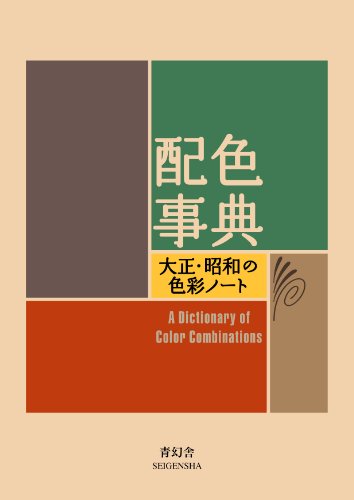 The first two guides below are about one 1933 book. Get Sanzo Wada's 1933 Dictionary on Amazon → Pocket-size paperback, about 5.9 × 4.3 in (15 × 11 cm), 256 pages, text in English and Japanese. Volume 1 of 2. Buying it as a gift? See the holiday gift guide Affiliate link; your price is unchanged. As an Amazon Associate we earn from qualifying purchases.
-
Guide · The book · 3 min
How to Use A Dictionary of Color Combinations: Find Any Colour's Matches
Look up a colour, then read its numbered combinations: plates 1–120 are pairs, 121–240 trios and 241–348 groups of four. A worked example and the colours with the most matches.
-
Guide · The book · 3 min
Is There a PDF of A Dictionary of Color Combinations? What Is Free and Legal
No official PDF or ebook exists. The 1930s original is free at Japan's National Diet Library, and every combination of the English edition is free here with hex codes and a CSV.
-
Guide · Color names · 4 min
Why Wada's Colors Have Names Like Hay's Russet: Ridgway's 1912 Color Standards
We matched all 159 English color names in Wada's dictionary against Robert Ridgway's 1912 Color Standards and Color Nomenclature. Most are his names, misprints included.
-
Guide · Reference books · 5 min
The Famous Color Dictionaries, From Werner's 1814 Nomenclature to Sanzo Wada
Six color dictionaries side by side: Werner (1814), Maerz and Paul (1930), Wada (1933–34), the ISCC–NBS names (1955) and two modern designer's books. What each holds and which you can still buy.
-
Pigments · Paintings · 6 min
The Yellow Problem: Why Painting Colours Are Not What the Artist Mixed
Chrome yellow browns, zinc yellow darkens to ochre, cadmium yellow turns off-white. Three famous paintings, three chemical failures, and what that means when you sample a palette from art.
-
Original research · Data · 6 min
Wada Palettes by Mood and Season: Grouping the 348 Plates
All 348 historical combinations grouped by computed mood — dark, pale, warm, cool, two-color, four-color — and by a practical seasonal reading, with example plates for each group.
-
Original research · Color theory · 6 min
Color Psychology in Wada's System: What 348 Plates Are Built to Feel Like
How often Wada sets warm against cool inside one plate, why the archive lives in the mid-tones, and what the two-color discipline does to a viewer — the psychology, measured from the archive.
-
Guide · Color theory · 7 min
Color Psychology: An Honest, Designer's Guide
What colors actually communicate in design — the cultural and contextual associations behind red, blue, green and the rest, honestly framed as associations rather than hard psychological law, and grounded in real palette practice.
-
Original research · Data · 6 min
What 348 Palettes Reveal: A Data Analysis of Sanzo Wada's Dictionary
We measured the full 348-combination set: the most-used colors, which hues dominate, how many colors a combination holds, and how many are legible enough for screen text. Original analysis, computed from the archive itself.
-
Original research · Accessibility · 5 min
Accessible Japanese Palettes: Which Wada Combinations Work for Text
Only a minority of Wada's 348 historical palettes hold a WCAG-AA contrast pair strong enough for body text. The full, contrast-sorted shortlist — with the exact pair to use in each.
-
Working guide · Web design · 6 min
How to Use Sanzo Wada Palettes in Web Design
Take a 1933 historical combination and use it in a real interface — pick for the medium, assign color roles, pass contrast, and ship it as CSS. A working method, with a worked example computed from the archive.
-
Color theory · Long read · 5 min
Heian Court Color Theory: Kasane, Kinjiki, and the Seasonal Palette
How the Heian imperial court systematised colour into layered-robe combinations (kasane no irome), forbidden pigments (kinjiki), and a 12-month seasonal calendar — with the 1933 Wada palettes that hold the same logic.
-
Color theory · Long read · 5 min
The Four Reds: Kurenai, Akane, Shu, Entan
Why Japanese tradition distinguishes safflower crimson from madder from vermilion from lead red — and which to reach for when the brief asks for 'a Japanese red.' Pigments, meaning, and four working palettes.
-
Biography · Reference · 5 min
Who Was Sanzo Wada? The Painter Behind the Dictionary
Paris-trained painter, Oscar-winning costume designer for Gate of Hell, founder of Japan's color research institute, and author of the study behind A Dictionary of Color Combinations. His life, a timeline, and his books.
-
Color theory · Long read · 5 min
Japanese Blues: Ai, Kon, Hanada, Asagi, Ruri, Gunjō
Why Japanese has a name for each step of the indigo vat (ai, kon, hanada, asagi) and two more for blues that come from stone (ruri and gunjō). The dyes, what each blue signals, and a working palette per blue.
-
Color theory · Long read · 4 min
Japanese Greens: Tokiwa, Matsuba, Moegi, Wakatake, Matcha, Seiji
How Japanese names green by what it grows on: evergreen pine (tokiwa, matsuba), new shoots and young bamboo (moegi, wakatake), tea (matcha) and glaze (seiji). What each green signals, and a working palette per green.
-
Color theory · Long read · 4 min
Japanese Purples: Murasaki, Edo-murasaki, Kikyō, Fuji
Why purple was the top court rank in Japan, how Edo's bluish purple differs from classical murasaki, and the two flower purples, kikyō and fuji. What each signals, and a working palette per purple.
-
Color theory · Long read · 5 min
Wabi-Sabi Color Theory: The Beauty of Things That Have Aged
What it actually means for color when a tradition values age over newness, asymmetry over balance, and imperfection over polish. Tea-room palette, three exemplars, and the anti-patterns to avoid.
-
Color theory · Long read · 5 min
Japandi Color Theory: Where Restraint Meets Light
How Japanese and Scandinavian color traditions converge — and which palettes from the Wada dictionary actually fit the Japandi brief. Three working palettes, three anti-patterns, and the three-axis test.
-
Color theory · Long read · 5 min
Scandinavian Color Theory: A Working Guide
What Scandinavian color tradition actually is — beyond IKEA-white — plus the hygge divergence, three palettes from the dictionary that fit, and the all-grey trap to avoid.
-
Reference · Glossary · 12 min
Japanese Color Glossary: 20 Traditional Named Colors
Twenty canonical traditional Japanese colour names with pigment origin, cultural register, and modern usage. Anchored for jump-linking — single-page reference complementing the per-color detail pages.
-
Reference · Glossary · 10 min
Color & Design Glossary: 22 Terms Every Palette Page Uses
Hue, saturation, complementary, triadic, RGB/CMYK, WCAG contrast, and 16 more design-vocabulary terms — with four relational terms illustrated by a real pairing computed from the 348-plate Wada archive, not an invented example.
New articles go out through the RSS feed and the newsletter.
Studio
Put the theory on paper
Colour theory sticks once you mix it by hand. These are the materials a colour study actually gets made with.
Affiliate links — as an Amazon Associate we earn from qualifying purchases.
-
Calibrite
ColorChecker Passport Photo 2
A pocket target for fixing white balance and exposure at the moment of capture — the step before any colour correction, if your palette starts from a photograph rather than a screen.
Listed on Amazon as Calibrite ColorChecker Passport Photo 2 Portable Color Calibration Kit for Photo and Video, 4 Target Set for White Balance, Exposure and Creative Look
See price on AmazonView on Amazon -
Kuretake
Gansai Tambi 24 — Art Nouveau
Gansai are traditional Japanese watercolour pans — dense, matte and easy to mix, the closest everyday medium to the flat printed colour Wada's plates were made in. This is the Art Nouveau-themed 'II' edition, a different 24 to the standard set.
Listed on Amazon as Kuretake GANSAI TAMBI Watercolor Paint Set 24 Colors II - Art Nouveau
See price on AmazonView on Amazon -
Kuretake
Gansai Tambi 48
The larger pan set. More range means mixing toward a specific plate rather than approximating it from a handful of colours.
Listed on Amazon as Kuretake Gansai Tambi Watercolor Paint Set, 48 Colors, Made in Japan | 48 vivid opaque colors, non-granulating pigment, large pans, palette & color chart, Professional Use, Artist Grade
See price on AmazonView on Amazon -
Strathmore
300 Series watercolour pad, 140 lb cold press
140 lb cold press is the weight that takes a wet wash without buckling — the paper most colour studies end up on.
Listed on Amazon as Strathmore 300 Series Tape Bound Watercolor Pad, 140 lb. Cold Press, 11 X 15 inches, White, 12 Sheets (360-111)
See price on AmazonView on Amazon
Amazon Associates affiliate links — your price is unchanged and a small commission keeps the archive free. As an Amazon Associate we earn from qualifying purchases.
Last updated