Gift guide
For color lovers & designers
Short answer: Sanzo Wada's Dictionary of Color Combinations (Vol. 1 if they're new to it, Vol. 2 if they already own it), or Josef Albers's Interaction of Color if they have both. If they're a maker rather than a collector, skip the books and go straight to the studio shelf below — the materials a color study actually gets made with. No filler picks here; every item on this page is one people who read color plates for fun already choose.
How these were picked
Nothing on this page is a guess. The three books below are the ones readers of this archive already reach for — the two Wada dictionaries and the Albers are, by a wide margin, the titles people click through to Amazon from a palette page. (If the question is specifically which Wada volume, the full plate-by-plate comparison answers it in more detail than belongs on a gift guide.)
The studio shelf exists because a book isn't always the right gift. Someone who reads a 1933 color plate is often about to try mixing that palette themselves, not add another reference to a shelf — so the materials below are picked for that reader specifically: pans that behave like the flat printed color Wada's plates were made in, paper that survives a wet wash, and the Pantone guide that translates a palette from screen to print.
Library
The three books
Wada Vol. 1, Wada Vol. 2, and the Albers — in the order most people actually want them.
Book links are Amazon Associates affiliate links. Your price is unchanged; a small commission supports the archive. As an Amazon Associate we earn from qualifying purchases.

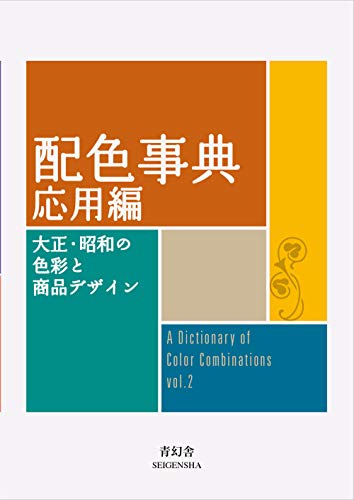

Torn between the two Wada dictionaries? Vol 1 vs Vol 2, compared plate by plate →
Book links are Amazon Associates affiliate links. Your price is unchanged; a small commission supports the archive. As an Amazon Associate we earn from qualifying purchases.
Studio
For the person who makes things
Gansai watercolors, the paper that takes them, and the print reference that matters once a palette leaves the screen.
Affiliate links — as an Amazon Associate we earn from qualifying purchases.
-
This site hands you hex codes. Color Bridge is the deck that shows what an RGB or HTML value becomes as CMYK ink, and which Pantone spot sits nearest it — the translation step between a screen palette and a printed one. Coated and uncoated because the same ink is not the same colour on both stocks.
Listed on Amazon as Pantone GP6102B Color Bridge Guide Set Coated & Uncoated, Multi-Colour
See price on Amazon -
Pantone
Color Bridge Guide — coated
The coated half on its own — Pantone to CMYK, RGB and HTML in a single fan. The smaller entry point if your work only ever goes onto coated stock.
Listed on Amazon as Pantone Color Bridge Guide Coated | Pantone to CMYK, RGB & HTML Color Matching Fan Deck for Graphic Design, Branding & Print | GG6103B
See price on Amazon -
Calibrite
ColorChecker Studio spectrophotometer
A spectrophotometer profiles the whole chain — display, printer, projector, scanner — so the colour you picked is the colour that comes out the other end. The full-fidelity option for work that ends up printed.
Listed on Amazon as Calibrite ColorChecker Studio Spectrophotometer for Complete Color Management for Display, Projector, Printer and Scanner Profiling
See price on Amazon -
Calibrite
Display Plus HL colorimeter kit
A colorimeter calibrates the monitor itself. Worth saying plainly: an uncalibrated screen is the most common reason a palette that looked right on your desk looks wrong everywhere else.
Listed on Amazon as Calibrite Video Photo Kit with Display Plus HL Colorimeter and ColorChecker Passport Video 2, 10,000 Nit Monitor Calibration, Camera Color Matching
See price on Amazon -
Calibrite
ColorChecker Passport Photo 2
A pocket target for fixing white balance and exposure at the moment of capture — the step before any colour correction, if your palette starts from a photograph rather than a screen.
Listed on Amazon as Calibrite ColorChecker Passport Photo 2 Portable Color Calibration Kit for Photo and Video, 4 Target Set for White Balance, Exposure and Creative Look
See price on Amazon -
Kuretake
Gansai Tambi 24 — Art Nouveau
Gansai are traditional Japanese watercolour pans — dense, matte and easy to mix, the closest everyday medium to the flat printed colour Wada's plates were made in. This is the Art Nouveau-themed 'II' edition, a different 24 to the standard set.
Listed on Amazon as Kuretake GANSAI TAMBI Watercolor Paint Set 24 Colors II - Art Nouveau
See price on Amazon -
Kuretake
Gansai Tambi 36
The larger pan set. More range means mixing toward a specific plate rather than approximating it from six colours.
Listed on Amazon as Kuretake GANSAI TAMBI Watercolor Paint Set 36 Colors
See price on Amazon -
140 lb cold press is the weight that takes a wet wash without buckling — the paper most colour studies end up on.
Listed on Amazon as Strathmore 300 Series Tape Bound Watercolor Pad, 140 lb. Cold Press, 11 X 15 inches, White, 12 Sheets (360-111)
See price on Amazon -
Pentel
Fude Touch brush sign pen
A felt brush tip for the labelling and linework around a swatch study — the annotation half of a colour notebook.
Listed on Amazon as Pentel Fude Touch Sign Pen, Black, Felt Pen Like Brush Stroke (SES15C-A) 3 Pieces
See price on Amazon -
When a palette leaves the screen, this is the shared vocabulary between you and the press. Coated and uncoated because the same ink is not the same colour on both.
Listed on Amazon as Pantone Formula Guide – Coated & Uncoated | Professional PMS Color Matching System for Print, Packaging & Graphic Design | GP1601B
See price on Amazon
Amazon Associates affiliate links — your price is unchanged and a small commission keeps the archive free. As an Amazon Associate we earn from qualifying purchases.
Questions, answered
What's the single best gift for someone who loves color theory?
A Dictionary of Color Combinations Vol. 1 by Sanzo Wada — it's the book most people mean when they say "Wada," the canonical 1933 set every other color reference cites, and a genuinely beautiful printed object (Japanese binding, matte plates). If they already own it, Vol. 2 is the better gift: 237 further plates that don't overlap with Vol. 1 and aren't reproduced anywhere on this site.
What if they already have both Wada volumes?
Josef Albers's Interaction of Color. It's a different kind of book — instructional rather than referential — and the one most designers eventually want alongside a Wada set: Wada gives you combinations, Albers explains why they read the way they do next to each other.
What's a good gift for someone who makes things, not just collects references?
Look at the studio shelf below instead of the books. A gansai watercolor set, a pad of cold-press paper, and a Pantone Formula Guide take someone from looking at a color plate to actually mixing and printing one — the materials a color study gets made with, not another book on the shelf.
Are these affiliate links?
Yes — Amazon Associates links, disclosed on this page and on the linked sections. Your price is unchanged; a small commission on qualifying purchases helps keep this archive free. We never show a price here (Amazon's own policy for affiliate content) and never suggest a pick that doesn't genuinely fit.