Colors that go with Sage Green for a nursery
Sage Green · #9CAF88
Sage Green (#9CAF88) — a soft, grey-tinged green — is best for a nursery with muted red, terracotta & clay, ochre & gold, and green. In a nursery, soften it with muted red, drawn from 8 historically-grounded combinations below.
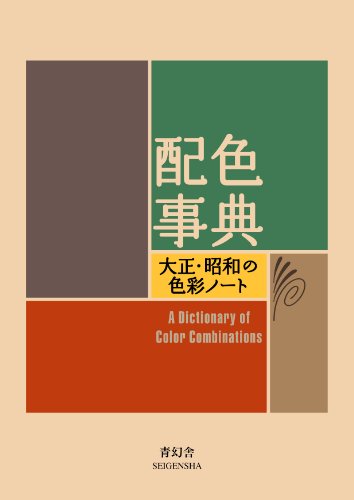 Most combinations in this archive come from one 1933 book. Get Sanzo Wada's 1933 Dictionary on Amazon → Pocket-size paperback, about 5.9 × 4.3 in (15 × 11 cm), 256 pages, text in English and Japanese. Volume 1 of 2. Buying it as a gift? See the holiday gift guide Affiliate link; your price is unchanged. As an Amazon Associate we earn from qualifying purchases.
Top combinations
See all 8 combinationsA nursery wants soft, low-contrast partners — gentle colors that soothe rather than stimulate, and grow with the room past the first year.
About sage green
Sage Green is a soft, grey-tinged green — a nearly neutral, balanced colour that reads as mid-toned. As a balanced tone it looks most resolved next to both warmer and cooler neighbours, and it needs both lighter and deeper shades nearby for the value contrast the eye reads as finished. That balance is what makes it feel serene in a nursery.
- HEX
- #9CAF88
- RGB
- 156, 175, 136
- HSL
- 89°, 20%, 61%
- CMYK
- 11, 0, 22, 31
Accessibility: put dark text on sage green for AAA legibility (contrast 7.4:1 against near-black).
Why sage green pairs with muted red, terracotta & clay, ochre & gold, and green
Across the 8 historical combinations below, sage green sits most often beside muted red, terracotta & clay, ochre & gold, and green. That tracks with colour theory: a balanced, mid-toned tone like this one wants both warmer and cooler neighbours so the scheme feels intentional rather than flat, and both lighter and deeper partners supply the light-to-dark range the eye needs.
- muted red
- terracotta & clay
- ochre & gold
- green
Using sage green in a nursery
In a nursery, soften it with muted red and terracotta & clay. Because sage green is mid-toned, it can cover larger surfaces, with green added for depth.
By the numbers: Corinthian Pink & Pale Lemon Yellow +1
The best-matching archive plate for this use, measured from its hex codes.
- Light reflectance (LRV) about 40. Sage Green reflects about 40% of the light, a true mid-tone that keeps its colour through the day. (Computed from the hex; check the LRV on the chip of the actual paint you buy.)
- #f8b6ba: LRV 57, contrast with sage green 1.4:1 (a tonal blend, below 3:1)
- #ffefae: LRV 86, contrast with sage green 2:1 (a tonal blend, below 3:1)
- No partner on this plate reaches 3:1 against sage green, so it works as a tonal scheme; add white or near-black if the room needs a crisp line.
8 combinations with sage green, from the 1933 Dictionary
Corinthian Pink & Pale Lemon Yellow +1
Plate 169 from Sanzo Wada's 1933 Dictionary of Color Combinations — Corinthian Pink, Pale Lemon Yellow, Warm Gray.
#a1a39a #f8b6ba #ffefae
Cherry Blossom & Young Bamboo
The softest pink of cherry blossoms set beside young bamboo green — spring, captured.
#A3C293 #F9D5E0 #F8F4E9 #4C5D3F
Pale Lemon Yellow & Pinkish Cinnamon +2
Plate 292 from Sanzo Wada's 1933 Dictionary of Color Combinations — Pale Lemon Yellow, Pinkish Cinnamon, Isabella Color, Ecru.
#c2ae93 #ffefae #eeb480 #c5a56e
Light Pinkish Cinnamon & Ecru +2
Plate 317 from Sanzo Wada's 1933 Dictionary of Color Combinations — Light Pinkish Cinnamon, Ecru, Lemon Yellow, Turquoise Green.
#c2ae93 #fcc79b #f8ed43 #b5decc
Red & Pale Lemon Yellow +2
Plate 261 from Sanzo Wada's 1933 Dictionary of Color Combinations — Red, Pale Lemon Yellow, Calamine Blue, Warm Gray.
#a1a39a #a72144 #ffefae #78cdd0
Grenadine Pink & Turquoise Green +1
Plate 230 from Sanzo Wada's 1933 Dictionary of Color Combinations — Grenadine Pink, Turquoise Green, Cobalt Green.
#96d1aa #f48067 #b5decc
Old Rose & Rainette Green +1
Plate 162 from Sanzo Wada's 1933 Dictionary of Color Combinations — Old Rose, Rainette Green, Lilac.
#8fa071 #d46d7a #b984af
Spectrum Red, Ivory Buff, Rainette Green & Aconite Violet
Plate 301 from Sanzo Wada's 1933 Dictionary of Color Combinations — Spectrum Red, Ivory Buff, Rainette Green, Aconite Violet.
#8fa071 #e31f26 #ebd3a2 #a36aa5
Questions about Sage Green for a nursery
What colors go with sage green for a nursery?
Sage Green (#9CAF88) — a soft, grey-tinged green — is best for a nursery with muted red, terracotta & clay, ochre & gold, and green. In a nursery, soften it with muted red, drawn from 8 historically-grounded combinations below. Other settings: colours that go with sage green.
What is the hex code for sage green?
Sage Green is #9CAF88 — a soft, grey-tinged green.
Does sage green go with white?
Yes. Sage Green reads clean against soft white and cream; for contrast, add one of: muted red, terracotta & clay, ochre & gold, green.
Sage Green in other settings
Other colors
Studio
Work with this pairing
You have the hex codes for Sage Green for a nursery. A paint deck is how you find the nearest real colour in a named line; a sample board is how you check it in your own light.
Affiliate links — as an Amazon Associate we earn from qualifying purchases.
-
Benjamin Moore
Classic Colors fan deck
A screen cannot tell you what a paint looks like. Hold this deck up in the room to find the nearest real colour in Benjamin Moore's line, by its name and number.
Listed on Amazon as "BENJAMIN MOORE" CLASSIC COLORS FAN DECK [CASE OF 1]
See price on AmazonView on Amazon -
Mighty Boards
Paint sample boards, 6 pack
Paint your sample on a board instead of the wall, then move it around the room to see the colour in morning and evening light.
Listed on Amazon as Large Paint Sample Boards for Testing Paint Colors - 6 Pack (White)
Amazon Associates affiliate links — your price is unchanged and a small commission keeps the archive free. As an Amazon Associate we earn from qualifying purchases.
From the archive
Support the archive The full catalog, on your disk, as a thank-you.
- All 378 palettes (348 Wada + 30 editorial) in five formats
- Figma design tokens (W3C-spec JSON, drag into any file)
- Tailwind v4 + v3 configs — drop into any project
- CSS custom properties — every plate, one stylesheet
- 378 SVG plates (348 Wada + 30 editorial) — print-ready at any size
- Full JSON — colors, names, eras, moods, dominant hues
Not on sale yet: join the list for one email when it opens. The free archive stays free, always.
Library
Go deeper on colour
The colour-theory books behind pairings like Sage Green — history, reference and the science of what works together.
Book links are Amazon Associates affiliate links. Your price is unchanged; a small commission supports the archive. As an Amazon Associate we earn from qualifying purchases.


Book links are Amazon Associates affiliate links. Your price is unchanged; a small commission supports the archive. As an Amazon Associate we earn from qualifying purchases.
Last updated