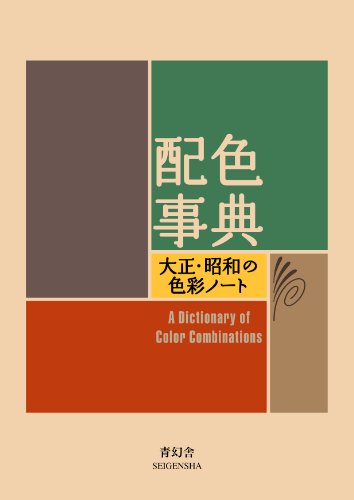
 The one designers reach for most is Sanzo Wada's.
 Six dictionaries at a glance
| Dictionary | Year | What it holds | Can you buy it? |
|---|---|---|---|
| Werner's Nomenclature of Colours Patrick Syme, after the mineralogist A. G. Werner | 1814 (2nd ed. 1821) | 108 named colours (110 in the 1821 edition), each tied to an animal, plant and mineral example | Yes, Smithsonian facsimile (2018) |
| A Dictionary of Color A. Maerz and M. Rea Paul | 1930 (2nd ed. 1950) | 56 color plates of samples with their trade and historic names | Out of print; used copies only |
| Haishoku Soukan → A Dictionary of Color Combinations Sanzo Wada | 1933–34 (Seigensha 2010) | Color combinations rather than single colors; 348 in the Seigensha edition | Yes, Vol. 1 and Vol. 2 |
| ISCC–NBS Dictionary of Color Names Kenneth L. Kelly and Deane B. Judd (US National Bureau of Standards) | 1955 | 267 named color categories, cross-referenced to names from other color systems | A government circular (NBS Circular 553), not a retail book |
| The Designer's Dictionary of Color Sean Adams (Abrams) | 2017 | Thirty key colors, their history and how they behave together | Yes |
| Color Index XL Jim Krause (Watson-Guptill) | 2017 | 1,100+ ready-made palettes with CMYK and RGB values | Yes |
Werner's Nomenclature of Colours (1814)
The German mineralogist Abraham Gottlob Werner devised a fixed set of color terms for describing minerals. The Edinburgh flower painter Patrick Syme turned it into a book in 1814: 108 colours (110 by the 1821 edition), each painted as a swatch and tied to an example from the animal, vegetable and mineral worlds, so a naturalist in the field could name a color the same way as everyone else. The 1821 second edition is the one Charles Darwin used on the voyage of the Beagle. Smithsonian Books reissued that edition in 2018 as a pocket facsimile with 110 swatches in 13 palettes.
Maerz and Paul, A Dictionary of Color (1930)
A. Maerz and M. Rea Paul's book, published by McGraw-Hill in New York in 1930 with a second edition in 1950, set out to match the color names used in trade, fashion and history to printed samples, on 56 color plates. Its names are among those the 1955 ISCC–NBS dictionary cross-referenced. It is out of print and turns up only second-hand.
Sanzo Wada, combinations instead of names (1933–34)
Sanzo Wada's six-volume study Haishoku Soukan did something different: it recorded which colors work together. The Kyoto publisher Seigensha brought it back as A Dictionary of Color Combinations in 2010, with 348 combinations, and a Volume II in 2020. Its English color names are mostly Robert Ridgway's, from his 1912 Color Standards and Color Nomenclature (the name-by-name match). Every one of those 348 combinations is on this site with hex, RGB and CMYK values: browse them all, read who Wada was, or see how the two volumes differ.
The ISCC–NBS Dictionary of Color Names (1955)
The Inter-Society Color Council and the US National Bureau of Standards built a system of standard color names, approved in 1939. In 1955 Kenneth Kelly and Deane Judd published it as a dictionary (NBS Circular 553) with 267 named color categories such as "vivid red" or "grayish olive", and cross-referenced the names used in other color systems and charts to it, so one color name could be translated into another.
Two modern ones for designers
Sean Adams' The Designer's Dictionary of Color (Abrams, 2017) takes thirty key colors one at a time, with their history and real design examples. Jim Krause's Color Index XL (Watson-Guptill, 2017) is the deadline book: more than 1,100 ready-made palettes with CMYK and RGB values.
Which one should you get?
- To name colors you see in nature: Werner's Nomenclature.
- For palettes that already work: Wada's A Dictionary of Color Combinations, or browse its 348 combinations here first.
- For fast palettes with print and screen values: Color Index XL.
- To understand what single colors mean: The Designer's Dictionary of Color.
Questions people ask
What is a color dictionary?
A reference that pairs printed color samples with names, values or combinations, so different people can describe or reuse exactly the same color. Some list single named colors (Werner, Maerz and Paul, ISCC–NBS); Sanzo Wada's lists colors that work together.
What is the most famous color dictionary?
For naturalists it is Werner's Nomenclature of Colours, the book Charles Darwin used on the voyage of the Beagle. For designers today it is Sanzo Wada's A Dictionary of Color Combinations, whose 348 combinations are all free to browse on this site.
Is there a free color dictionary online?
Yes. This site lists 159 named colors from Sanzo Wada's dictionary with hex, RGB and CMYK values, plus all 348 of his combinations. The 1955 ISCC–NBS dictionary was published by the US government as NBS Circular 553.
— colorcombinations.org editorial
Library
The color dictionaries you can still buy
Werner's facsimile, both Wada volumes, and the two modern designer's dictionaries.
Book links are Amazon Associates affiliate links. Your price is unchanged; a small commission supports the archive. As an Amazon Associate we earn from qualifying purchases.

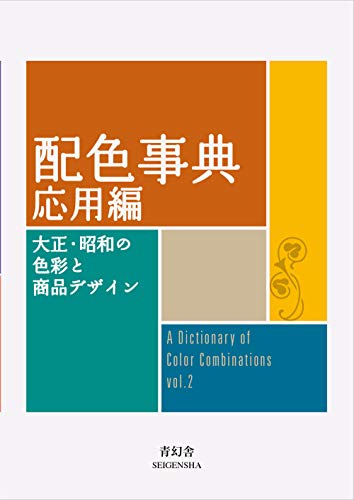


Torn between the two Wada dictionaries? Vol 1 vs Vol 2, compared plate by plate →
Book links are Amazon Associates affiliate links. Your price is unchanged; a small commission supports the archive. As an Amazon Associate we earn from qualifying purchases.