About this combination
Combination 326 of 348 in Wada's six-volume 1933 work: Sulpher Yellow, Peach Red, Yellow Green and Night Green. Peach Red is the one loud voice; the other three are a cream and two greens that sit only 1.24:1 apart, close enough to read as a single green family in two strengths. Wada's spellings differ slightly from Ridgway's 1912 Color Standards, where the same colours appear as Sulphur Yellow (plate V), Peach Red (plate I), and Yellow-Green and Night Green, both on plate VI. Sulpher Yellow is the most used colour on this page, appearing in 18 combinations of this reconstruction, while Night Green appears in only 4. For type, Peach Red works better with black (6.25:1) than with white (3.36:1, enough only for large headings), and Peach Red on Sulpher Yellow reaches 2.83:1, so use that pair for shapes and blocks, not for words.
Where it works
- Garden, produce and farm-shop branding: the two greens as the base, Peach Red for the one element that must be seen first
- A cream page (Sulpher Yellow) with black body text and Peach Red buttons or price tags carrying black labels
- Spring and Easter print pieces where a red accent keeps the soft greens from going flat
Historical context
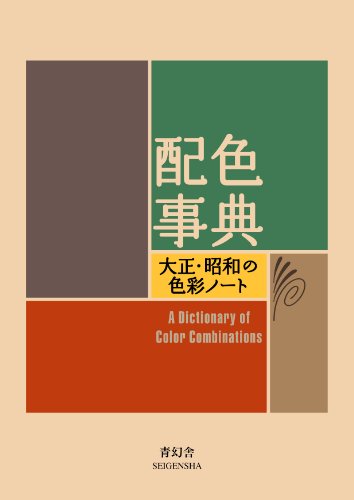
Plate 326 of Wada's 348 anchors Sulpher Yellow, Peach Red, Yellow Green and Night Green in the yellow family — a 4-colour grouping with a refined, warm, bold character, recorded in Sanzo Wada's 1933 Dictionary of Color Combinations (six volumes; Seigensha Art Publishing 2010 reprint), and in the public domain by age. Its strongest pairing — Sulpher Yellow on Peach Red — reaches a contrast ratio of 2.83:1, below the WCAG text-contrast floor, so it reads best in decorative blocks rather than text pairings.
The numbers behind Sulpher Yellow & Peach Red +2
Computed from the 4 hex values on this page. Use them to decide where each colour goes before you open a design file.
- Sulpher Yellow
#F5ECC2· RGB 245, 236, 194 · HSL 49°, 72%, 86% · LRV 83. Text on it: near-black, 14.6:1 (AAA). - Peach Red
#F15A30· RGB 241, 90, 48 · HSL 13°, 87%, 57% · LRV 26. Text on it: near-black, 5.2:1 (AA). - Yellow Green
#AFD472· RGB 175, 212, 114 · HSL 83°, 53%, 64% · LRV 57. Text on it: near-black, 10.3:1 (AAA). - Night Green
#87C540· RGB 135, 197, 64 · HSL 88°, 53%, 51% · LRV 45. Text on it: near-black, 8.4:1 (AAA).
Hue
On the HSL colour wheel: Sulpher Yellow at 49°, Peach Red at 13°, Yellow Green at 83°, Night Green at 88°. The widest gap is 75°, between Peach Red and Night Green, so the combination works by contrast of hue rather than by family.
Light and dark
Lightness runs from 51% (Night Green) to 86% (Sulpher Yellow), a 35-point spread: a moderate value spread: the colours separate in greyscale, but not strongly, so keep text off the closer pairs. Temperature: Sulpher Yellow, Peach Red are warm (reds, oranges, yellows); Yellow Green, Night Green are cool (greens, blues, violets). A warm-cool mix lets one side advance and the other recede.
A starting split
The 60-30-10 convention gives the largest area to the quietest colour and the smallest to the loudest. Ranked by saturation that means Yellow Green (53%) for about 60%, Night Green (53%) and Sulpher Yellow (72%) for about 30%, and Peach Red (87%) as the 10% accent. It is a starting point, not a rule: Wada's plates show the colours at equal size.
Where these colours appear again
- Sulpher Yellow appears in 17 other combinations, including Sulpher Yellow & Black and Sulpher Yellow & Pale King's Blue.
- Peach Red appears in 7 other combinations, including Naples Yellow & Peach Red and Pyrite Yellow & Peach Red +2.
- Yellow Green appears in 4 other combinations, including Pale Lemon Yellow & Yellow Green and Orange & Yellow Green +1.
- Night Green appears in 3 other combinations, including Mars Brown Tobacco & Night Green and Ochraceous Salmon & Night Green.
Sulpher Yellow (spelled "Sulphur Yellow") a name from Robert Ridgway's 1912 Color Standards and Color Nomenclature, plate V. Peach Red is a name from Robert Ridgway's 1912 Color Standards and Color Nomenclature, plate I. Yellow Green (spelled "Yellow-Green") a name from Robert Ridgway's 1912 Color Standards and Color Nomenclature, plate VI. Night Green is a name from Robert Ridgway's 1912 Color Standards and Color Nomenclature, plate VI. Why Wada's English names come from Ridgway.
Accessibility
WCAG contrast ratios between every color pair. Use the strongest combinations for text; the weakest ones make good decorative backgrounds.
Strongest pair: Sulpher Yellow on Peach Red — 2.83:1 (Fail)
- Sulpher Yellow·Peach Red
- Sulpher Yellow·Yellow Green
- Sulpher Yellow·Night Green
- Peach Red·Yellow Green
- Peach Red·Night Green
- Yellow Green·Night Green
Of the 6 pairs here: 6 are decorative only, below 3:1.
Studio
Taking Sulpher Yellow & Peach Red +2 off the screen
A hex code is an instruction to a screen, not a colour. Where this palette is going decides what it needs next.
Affiliate links — as an Amazon Associate we earn from qualifying purchases.
-
...onto paper
Start here if the palette gets printed. Screen colour and ink colour are not the same colour, and this is the deck that translates between them.
Pantone
Color Bridge Guide Set — coated & uncoated
Listed on Amazon as Pantone GP6102B Color Bridge Guide Set Coated & Uncoated, Multi-Colour
See price on AmazonView on Amazon -
...onto a screen you can trust
Start here if it stays digital. An uncalibrated monitor is the single most common reason a palette that looked right on your desk looks wrong everywhere else.
Calibrite
ColorChecker Studio spectrophotometer
Listed on Amazon as Calibrite ColorChecker Studio Spectrophotometer for Complete Color Management for Display, Projector, Printer and Scanner Profiling
See price on AmazonView on Amazon -
...by hand
Start here if you are mixing it. Wada's plates were flat printed colour; gansai pans are the closest everyday medium to them.
Pentel
Fude Touch brush sign pen
Listed on Amazon as Pentel Fude Touch Sign Pen, Black, Felt Pen Like Brush Stroke (SES15C-A) 3 Pieces
See price on AmazonView on Amazon
Amazon Associates affiliate links — your price is unchanged and a small commission keeps the archive free. As an Amazon Associate we earn from qualifying purchases.