How the combinations are numbered
Every combination has a number from 1 to 348, and the number is the quickest way in. The size of the combination follows from it:
| Plates | Colours each | How many |
|---|---|---|
| 1–120 | 2 | 120 pairs |
| 121–240 | 3 | 120 trios |
| 241–348 | 4 | 108 groups of four |
So if a brief allows two colours, you only need plates 1–120; for a poster with an accent, look at the trios; for an interior or a brand system, the groups of four. On this site, the archive filters by 2, 3 or 4 colours the same way.
Start from a colour you already have
Most people come to the book with one colour fixed: a brand colour, a wall, a fabric. In the plate data this archive uses, each of the 159 colours carries its name, CMYK values and the numbers of the combinations it appears in, so you look the colour up and go straight to its matches. For screen work, each colour page here adds hex and RGB.
Worked example with the colour Wada used most, Black, which appears in 23 combinations:
- 6 pairs: 46, 52, 62, 69, 112, 117
- 5 trios: 144, 190, 207, 216, 221
- 12 groups of four: 242, 255, 256, 269, 276, 288, 298, 313, 323, 337, 340, 344
Which colours give you the most options
Colours are not used evenly. Half of the 159 colours appear in 6 combinations or fewer, and 11 appear in only one. If your colour has few matches, look up its nearest neighbour by name or hue instead. These six have the most:
- Black 23 combinations
- Pale Lemon Yellow 19 combinations
- Raw Sienna 19 combinations
- Sulpher Yellow 18 combinations
- Ivory Buff 16 combinations
- Turquoise Green 16 combinations
Or start from a mood or a season
If no colour is fixed yet, browse by feeling rather than by number: the plates grouped by mood and season, or the ones that hold up on screen.
Do you need the book to use it?
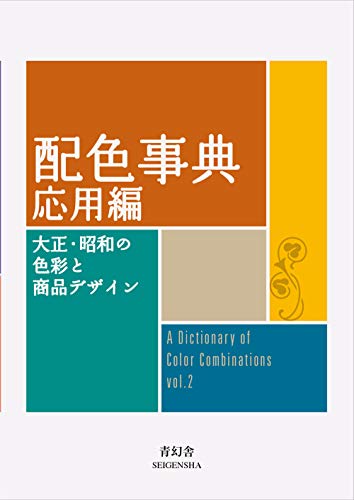
Not for the colours: all 348 combinations are on this site with hex, RGB and CMYK values, and the set downloads as a CSV. People buy the printed book for the object itself, Seigensha's small edition with matte plates, and for a copy they can cite. There is no official PDF (what is free and where). For plates this archive does not hold, the follow-up is Vol. 2 (the two volumes compared).
Questions people ask
How do you use A Dictionary of Color Combinations?
Start from a colour you already have, find it among the book's 159 colours, and go to the numbered combinations it appears in. The numbers also tell you the size: plates 1–120 pair two colours, 121–240 combine three, and 241–348 combine four.
How many colours and combinations are in the book?
348 numbered combinations built from 159 named colours: 120 pairs, 120 trios and 108 groups of four.
Which colour appears in the most combinations?
Black, in 23 of the 348 combinations. Half of the 159 colours appear in 6 or fewer, and 11 appear in just one.
Do I need the book to use the combinations?
No. All 348 combinations are free on colorcombinations.org with hex, RGB and CMYK values. The printed book is worth it for the object itself, or as a citable copy of Wada's work.
— colorcombinations.org editorial
Library
The two Wada books in print
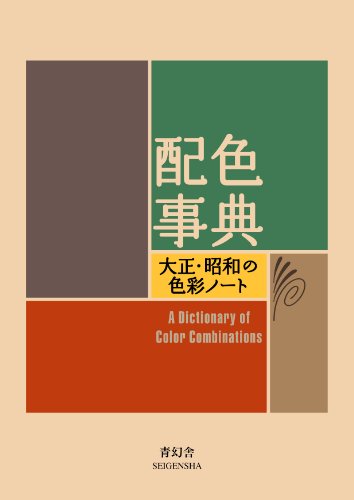
Vol. 1 holds the combinations numbered above. Vol. 2 holds plates this archive does not.
Book links are Amazon Associates affiliate links. Your price is unchanged; a small commission supports the archive. As an Amazon Associate we earn from qualifying purchases.
Torn between the two Wada dictionaries? Vol 1 vs Vol 2, compared plate by plate →
Book links are Amazon Associates affiliate links. Your price is unchanged; a small commission supports the archive. As an Amazon Associate we earn from qualifying purchases.