Edo era
Persimmon & Burnt Brown— 柿と焦茶
Autumn persimmon against scorched cedar — harvest colors from the countryside.
Hue family · 27 colors · 72 palettes
Persimmon, tangerine, amber — Japanese orange between red ceremony and yellow sunlight.
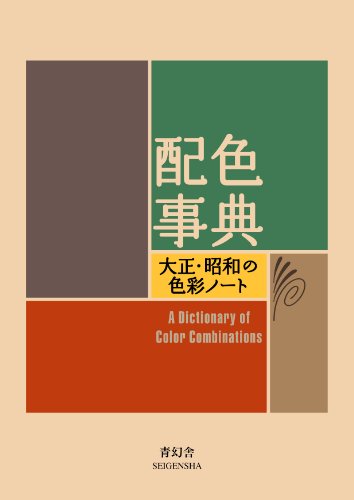 24 of these 27 colors come from one 1933 book. Get Sanzo Wada's 1933 Dictionary on Amazon → Pocket-size paperback, about 5.9 × 4.3 in (15 × 11 cm), 256 pages, text in English and Japanese. Volume 1 of 2. Buying it as a gift? See the holiday gift guide Affiliate link; your price is unchanged. As an Amazon Associate we earn from qualifying purchases.
Orange in the Wada palette occupies the warm middle distance between red's ceremony and yellow's daylight: kakishibu (persimmon-tannin used to dye paper and cloth), daidai (bitter-orange new-year decoration), and akebono (dawn). Less culturally fixed than red, more emotionally direct than yellow — the working palette of autumn produce, sunset, and clay.
Click any swatch to see the palette where it appears. Every color page lists hex, RGB, WCAG contrast, and cross-links to every Wada plate that uses it.
72 historical combinations from the 1933 archive where orange carries the strongest visual weight. Each palette page exports as JSON, Tailwind config, CSS variables, or a downloadable share-card image.
Last updated
Tell us the colour, mood, or palette you were after — it shapes which editorial combinations we add next.
Thank you — noted for the editorial queue.
Did you find what you were looking for?
Thank you. We read every answer and use it to improve this site.